
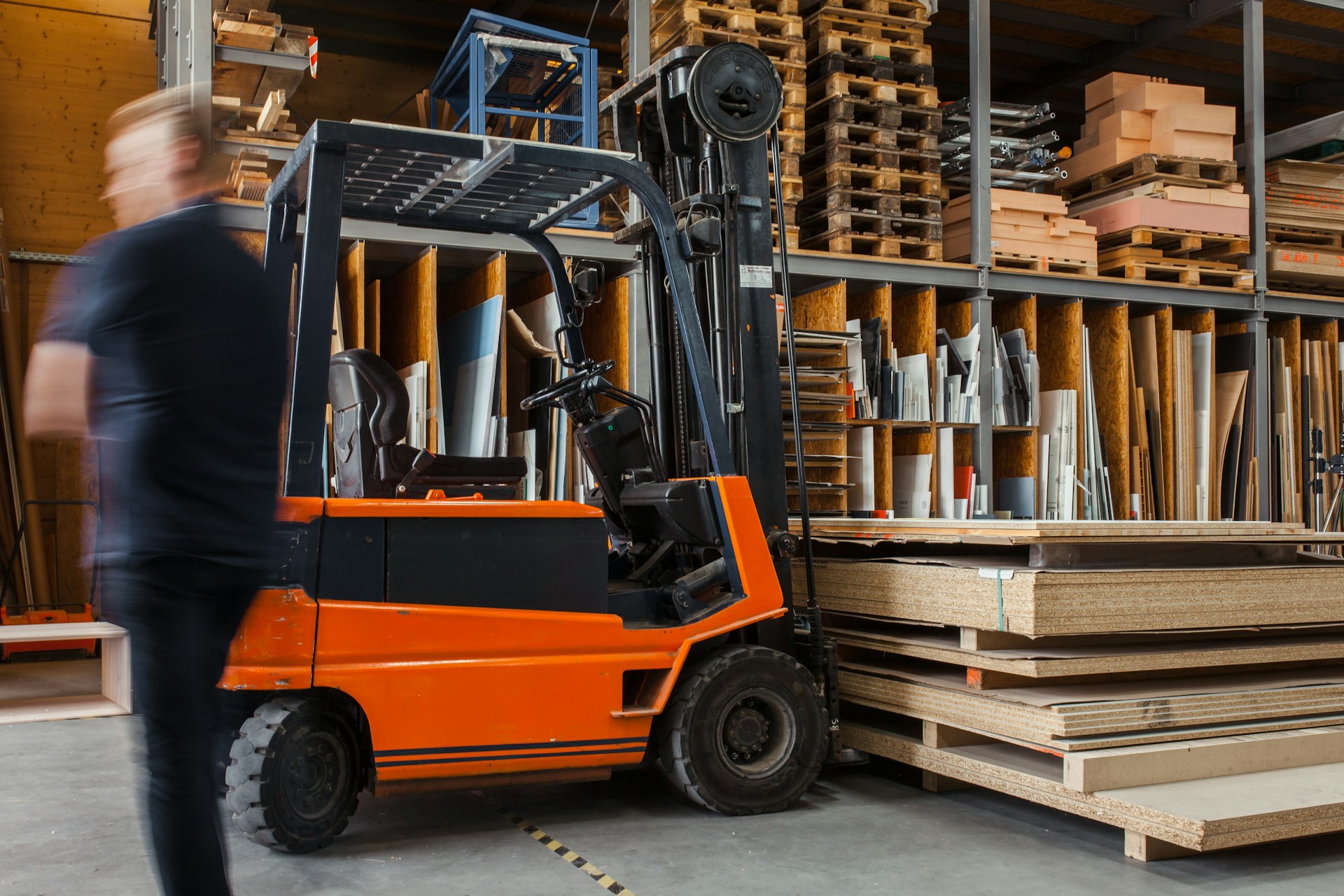
Selecting the right forklift is crucial for businesses that require efficient material handling. Whether you’re managing a warehouse, a construction site, or a retail space, the forklift you choose can significantly impact your operations. This guide will help you understand the different types of forklifts, their specific uses, and factors to consider when making your decision.
Types of Forklifts
1. Counterbalance Forklifts
Counterbalance forklifts are the most common type of forklift. They have a weight at the rear of the vehicle to counterbalance the load being lifted at the front. These forklifts are suitable for a wide range of applications, including indoor and outdoor use.
2. Reach Trucks
Reach trucks are designed for narrow aisle operations, commonly found in warehouses. They have extendable forks that can reach deep into racks, making them ideal for high-density storage environments.
3. Pallet Jacks
Pallet jacks, also known as pallet trucks, are used for moving palletized loads over short distances. They are available in manual and electric versions and are perfect for low-intensity operations.
4. Order Pickers
Order pickers are used for picking individual items from racks in warehouses. They allow operators to be lifted to the level of the rack, which is ideal for picking small quantities of goods.
5. Telehandlers
Telehandlers, or telescopic handlers, have a boom that can extend forward and upward. They are versatile machines used in construction, agriculture, and other industries requiring high reach and load capacity.
6. Rough Terrain Forklifts
Rough terrain forklifts are designed for outdoor use on uneven surfaces. They have larger, robust tires and a powerful engine to navigate challenging terrains, making them suitable for construction sites and agricultural settings.
7. Industrial Forklifts
Industrial forklifts are heavy-duty machines used in manufacturing and large warehouse operations. They can handle heavier loads and are built for continuous use in demanding environments.
Factors to Consider When Choosing a Forklift
1. Load Capacity
Determine the maximum weight the forklift needs to lift. Overloading a forklift can be dangerous and cause mechanical failure. Always choose a forklift with a capacity slightly higher than your maximum load requirements.
2. Lift Height
Consider the maximum height you need to lift loads. Ensure the forklift you select can reach the highest point in your storage or work area.
3. Operating Environment
Assess whether your forklift will be used indoors, outdoors, or both. For indoor use, consider electric forklifts to reduce emissions and noise. For outdoor use, choose forklifts with robust tires and higher ground clearance.
4. Aisle Width
Evaluate the width of the aisles in your facility. Narrow aisle forklifts, like reach trucks, are designed to operate in tight spaces, maximizing storage efficiency.
5. Fuel Type
Forklifts can be powered by electricity, propane, diesel, or gasoline. Electric forklifts are ideal for indoor use due to their zero emissions, while diesel and propane forklifts are better suited for outdoor use due to their power and durability.
6. Frequency of Use
Consider how often the forklift will be in operation. For heavy, continuous use, invest in a durable, high-capacity forklift. For occasional use, a less expensive model may suffice.
7. Attachments
Think about any specific attachments you might need, such as sideshifters, fork positioners, or clamps. These can enhance the versatility of your forklift and improve efficiency.
Conclusion
Choosing the right forklift involves careful consideration of your specific needs and operating environment. By understanding the different types of forklifts and evaluating key factors such as load capacity, lift height, and operating conditions, you can select a forklift that enhances your productivity and safety. Investing in the right forklift can lead to significant long-term benefits for your business, ensuring efficient and effective material handling operations.